55 min
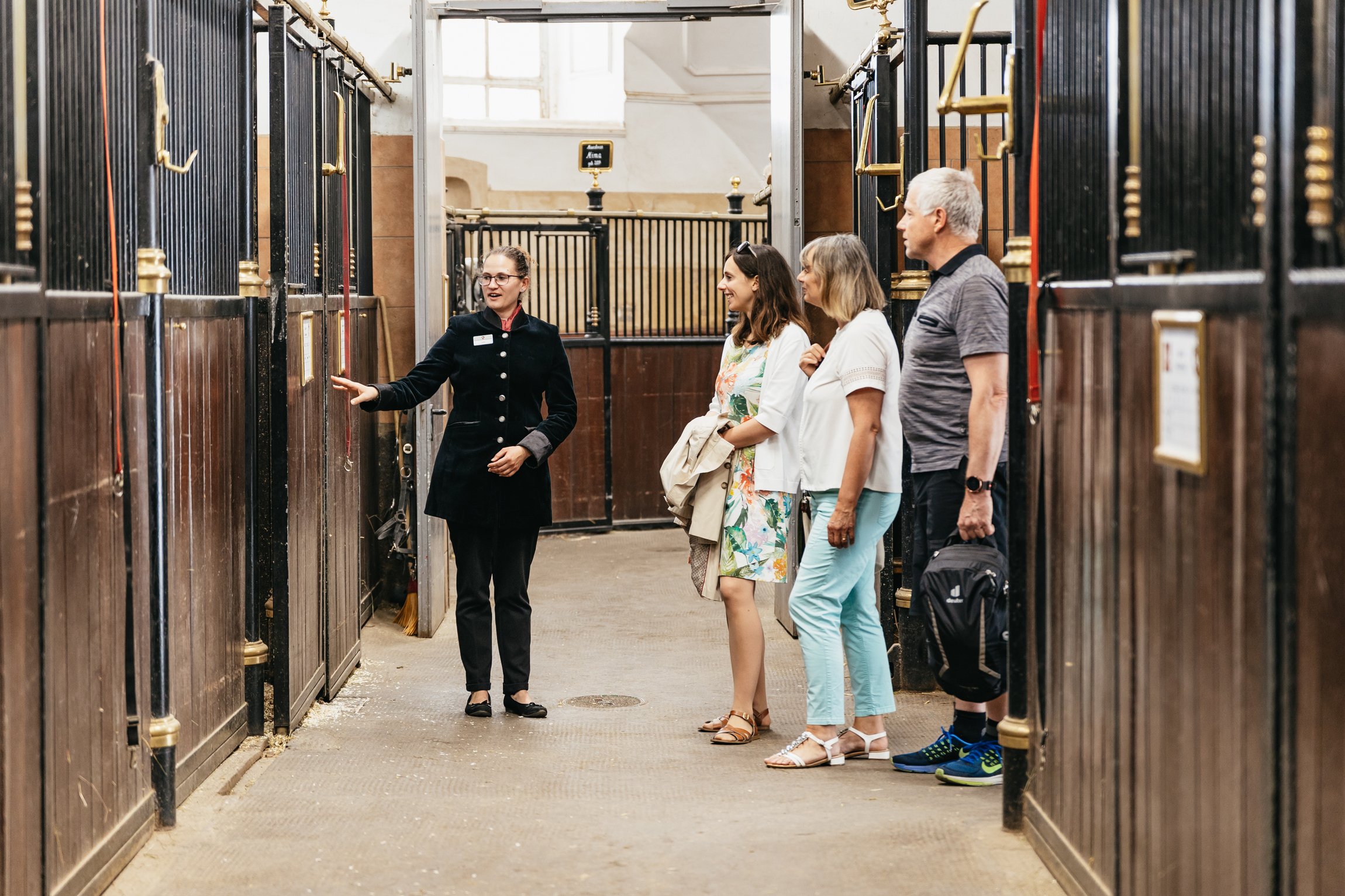
Spanish Riding School Behind-the-Scenes Guided Tour
Discover over 450 years of classical equestrian heritage with exclusive access to baroque halls and stables
Reserve
Hand-picked by our editors — only the best 5 experiences from 47 reviewed.
Verified partners for every tour, free cancellation where available, and instant confirmation on every booking.
55 min
Discover over 450 years of classical equestrian heritage with exclusive access to baroque halls and stables
Reserve
2 hr 40 min
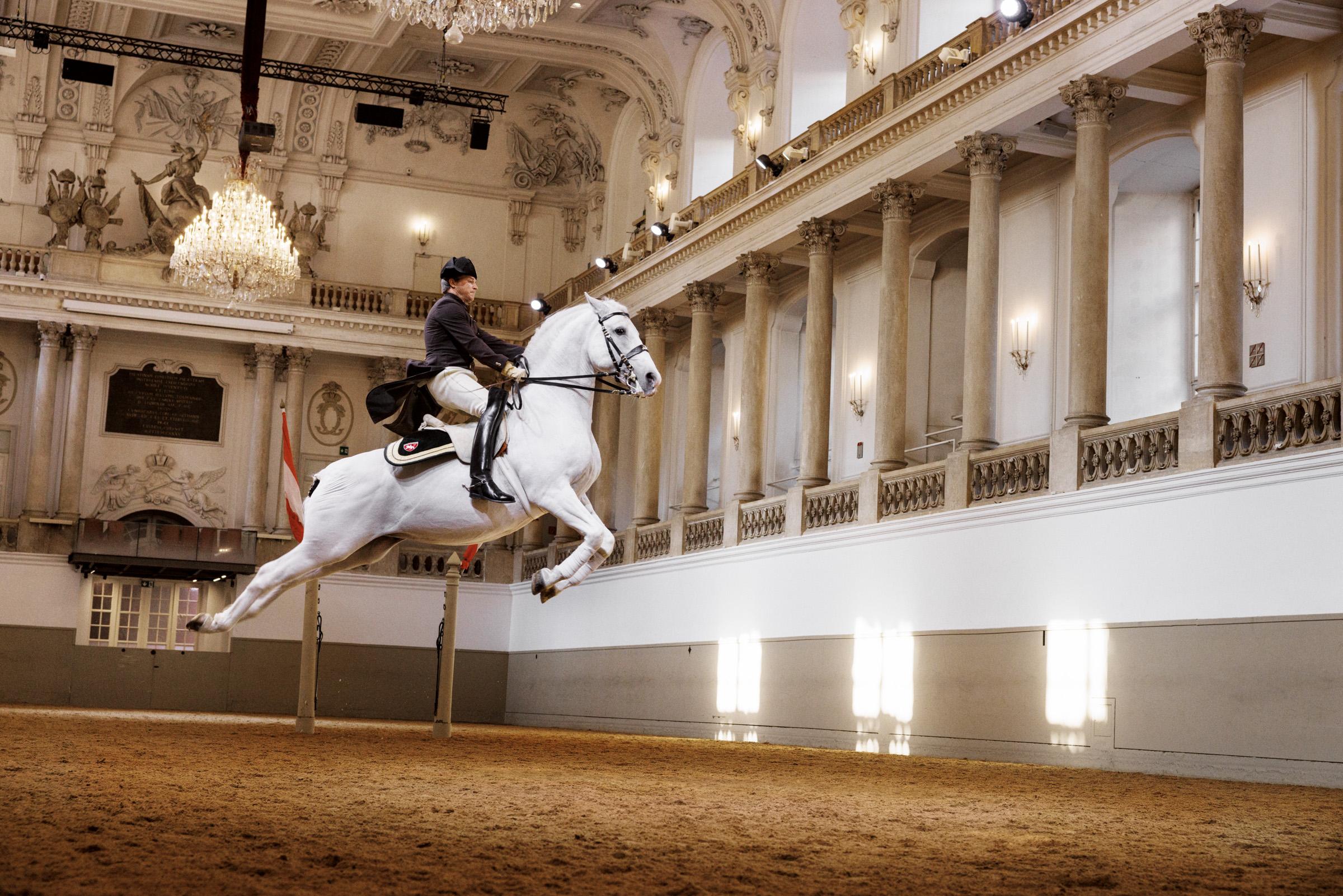
Watch the renowned white horses perform classical dressage in Vienna's historic baroque riding hall
Reserve
1 hr
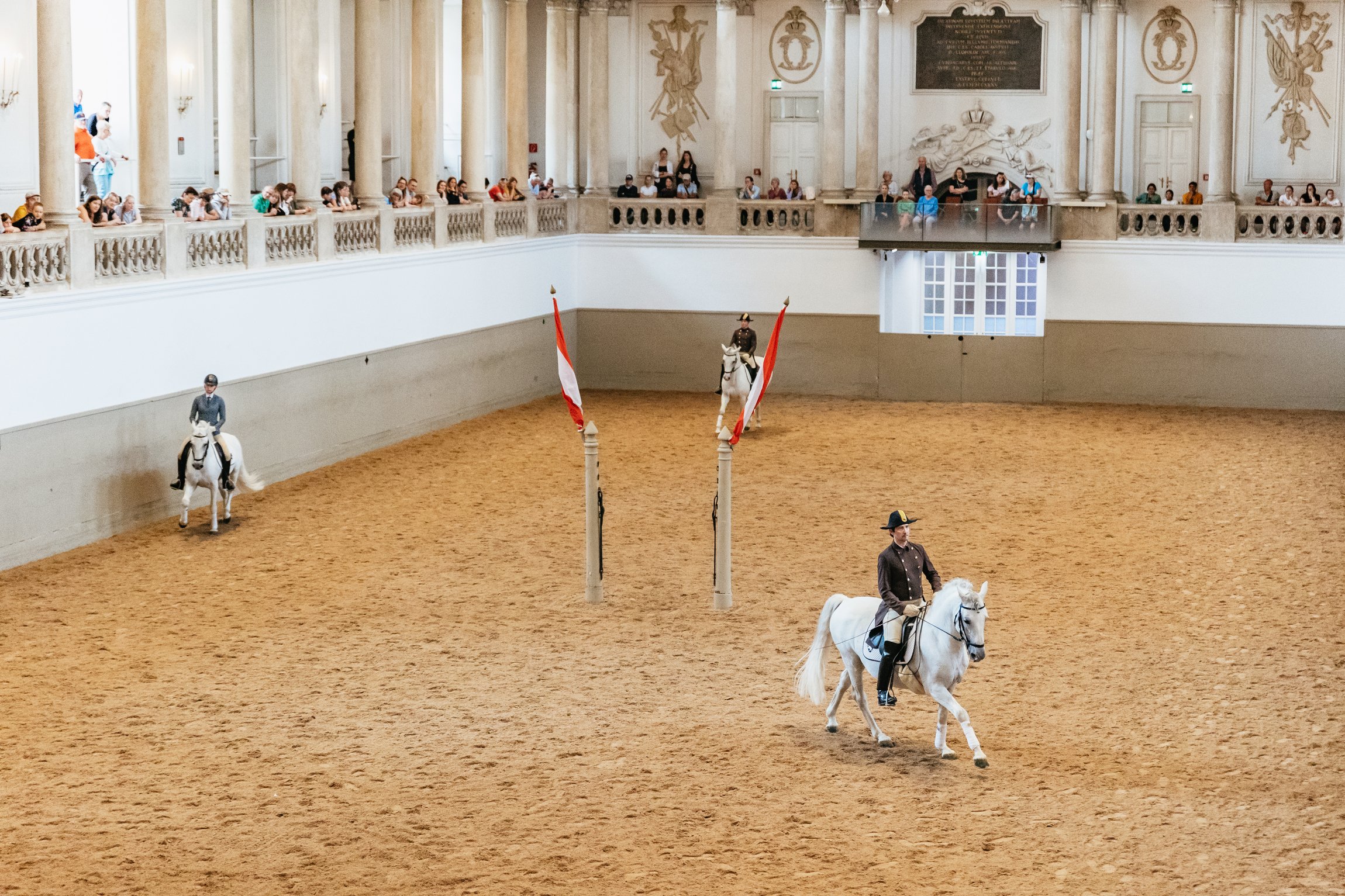
Watch Lipizzaner stallions train in a baroque arena while classical Viennese music fills the air
ReservePrices from verified partners. Availability updates in real time at checkout. Free cancellation policies apply where shown.
The landmarks, rooms, and views travelers on this tour remember — all visible on a single visit.
Designed by Josef Emanuel Fischer von Erlach in 1735, this hall features white marble columns and a vaulted ceiling
One of Vienna's most significant Renaissance buildings, housing the stallions for over 450 years
Home to one of the world's largest oval horse walkers, demonstrating modern training techniques
Exhibits traditional equipment used in the daily care of the white stallions
Contains over 2000 individual parts and provides a unique architectural perspective of the hall
They complement each other, but most visitors who prioritize equestrian discipline over choral music find the Spanish Riding School more rewarding for a lipizzaner tour vienna.
| Feature | Top pick Spanish Riding School | Vienna Boys Choir |
|---|---|---|
Primary Focus |
Classical equestrian artistry | Choral vocal performance |
Performance Style |
Athletic choreography | Soprano and alto singing |
Venue Atmosphere |
Historic indoor arena | Imperial chapel or concert hall |
Typical Duration |
1–2 hours | 1–1.5 hours |
Audience Suitability |
Animal lovers and history buffs | Music enthusiasts and families |
Booking Lead Time |
4–8 weeks recommended | 2–6 weeks recommended |
| See tickets → |
Verdict: Select the lipizzaner tour vienna tickets if you prefer physical athleticism, whereas the choir serves those seeking melodic mastery.
Choose your ticket, select your date, and reserve in under two minutes. Secure checkout handled by our verified partner.
Instant confirmation by email, with a mobile voucher you can save offline. No printing, no queuing at a collection desk.
Arrive at the entrance, show your voucher on your phone, and walk in. Most tickets include priority or skip-the-line access.
Practical details for your visit straight from our verified partners — hours, access, rules, and how to get there.
Michaelerplatz 1, 1010 Wien
Arrive 5 minutes before tour start
Use U3 to Herrengasse station or Trams 1, 2, D to Kärntner Ring
Park at Freyung or Neuer Markt garages; limited street parking
Smart casual is recommended for performances. No specific attire is required for the standard lipizzaner tour vienna.
There are no cloakrooms or luggage storage facilities available. Visitors should bring only essential items as large bags and suitcases are not permitted inside the lipizzaner tour vienna site.
Photography and video recording are strictly forbidden during performances and most guided tours to protect the horses and maintain the imperial atmosphere.
The historic building lacks elevators. Access to the royal box and galleries requires climbing stairs, making them unsuitable for guests with limited mobility. Wheelchair spaces must be requested in advance via email.
Mobile phones should be silenced during all events and tours. Use of recording features is prohibited.
Children under the age of 3 are not admitted to the lipizzaner tour vienna. Children aged 3–6 years may join guided tours free of charge.
Food and drink are not permitted inside the riding halls. Visitors may enjoy nearby cafes in the 1st district before or after their lipizzaner tour vienna session.
Dogs and other pets are strictly prohibited from entering the facility. There are no pet-sitting services available on-site.
Ensure you arrive 5 minutes before your scheduled lipizzaner tour vienna start time. Tickets for the lipizzaner tour vienna should be collected at the Visitor Center.
Best time to go, insider tips, nearby landmarks, and the cancellation fine print — flip through to skim what matters to you.
How crowds, weather, and events shift across the year.
Mild temperatures perfect for exploring Vienna's historic district.
Last chance to see stallions before the summer break.
Stallions return; cooler weather and smaller crowds.
Optimal conditions for indoor architecture and school tours.
Small details that turn a good visit into a great one.
Tickets for a popular lipizzaner tour vienna sell out weeks in advance.
Verify performance dates online to avoid disappointment during training weeks.
Written confirmation is mandatory for reserved wheelchair slots.
If booking a gallery seat for performances, prepare for significant stair climbing.
Consider an architectural lipizzaner tour vienna to see the roof structure.
Do not touch the horses to ensure the health of the school stallions.
Non-bookable sights within a short walk — free to visit, easy to pair.
Former imperial palace complex housing various museums
Gothic cathedral and iconic symbol of the city
Magnificent baroque state hall within the Hofburg
World-class art museum located in a historic palace
Flexible, no hidden fees.
Tickets for a specific date are generally non-refundable. For cancelled events, refunds are processed via the box office or automatic e-ticket return within seven days.
Hand-picked options within walking distance — pick a district for vibe, or a specific hotel for convenience.
Historic hotel near the State Opera
Comfortable stay in the 1st district
Private apartments available in the historic center
The Spanish Riding School has trained Lipizzaner stallions in the same repertoire since 1572, making it the oldest continuously operating institution of its kind in the world. The Habsburg court commissioned these white horses from the stud farm in Lipica — then part of the Austrian Empire, now Slovenia — to perfect the classical dressage movements known as airs above the ground, martial exercises born from Renaissance battlefield tactics. Today the stallions perform levades, caprioles, and courbettes in the Winter Riding School, a chandelier-lit baroque hall built by Joseph Emanuel Fischer von Erlach in 1735. The Lipizzaner breed itself nearly vanished during World War II. In 1945, as Soviet forces advanced toward Austria, American General George Patton ordered the evacuation of the Lipica stud farm, relocating 250 horses to safety in Bavaria. Without that intervention, the bloodline — meticulously maintained through six foundation sire lines — would have been lost. The Spanish Riding School returned to Vienna in 1955, resuming daily training in the same white-columned hall where Franz Joseph once watched from the imperial box. Visitors attending a Lipizzaner tour Vienna session witness riders in bicorne hats and brown tailcoats guiding six-year stallions through piaffe sequences and pirouettes. Morning training runs Tuesday through Saturday, with the horses working in pairs under natural light from the hall's arched windows. Behind-the-scenes stable tours access the Renaissance stalls where each stallion occupies a numbered box, its nameplate hand-lettered in calligraphy. The tack room holds saddles dating to the 18th century, their leather darkened by centuries of use. Performances in the Winter Riding School follow a script unchanged since Maria Theresa's reign. Riders enter to a polonaise, salute the portrait of Charles VI, then execute a 70-minute program of school quadrilles and pas de deux. The stallions — born bay or black, turning white by age ten — move in synchrony across the tan sand floor, their choreography rooted in the principles Xenophon recorded in 400 BCE. No microphones amplify the hoofbeats. No spotlights break the glow of the chandeliers. The institution preserves its methods not as nostalgia but as a living technique, its riders still mastering the same seat and aids their predecessors learned under the Habsburgs.
"The stallions perform levades, caprioles, and courbettes in a chandelier-lit baroque hall built in 1735."
A step-by-step walkthrough of the visit — what you'll see, how long each stage takes, and the details that matter.
You arrive at Michaelerplatz before 9:00 AM and pass through the arched entrance beneath the Hofburg dome. Security checks bags at the vestibule, then ushers you into the Winter Riding School's gallery seating. Below, riders in tricorne hats guide white stallions through warm-up exercises, their hooves clicking on the sand. Morning training lasts 75 minutes. You watch a bay four-year-old learn piaffe under a senior rider's quiet corrections, its legs lifting in measured rhythm. Behind-the-scenes tours meet in the main courtyard and descend to the stable block. Your guide unlocks the tack room, where saddles hang on pegs labeled with each stallion's name. You walk the cobblestone corridor past 68 stalls, pausing at the box of Conversano Aquileia, a 12-year-old performing stallion. He nuzzles your palm through the bars. The guide explains the six sire lines — Pluto, Conversano, Neapolitano, Favory, Maestoso, Siglavy — and why each colt remains unnamed until it proves itself under saddle at age four. Performance tickets grant access to the baroque hall's main floor or gallery. You take your seat 15 minutes before the 11:00 AM start. The chandeliers dim. Eight riders enter in formation, salute the imperial portrait, and begin a quadrille set to a recording of Mozart. The stallions execute synchronized pirouettes, their tails braided with gold cord. After 70 minutes, the final capriole sends a stallion four feet into the air, its hind legs kicking horizontal. You exit through the same arched passage, blinking into the midday light of Michaelerplatz.
Yes, tickets can be booked online or via the box office at Michaelerplatz 1, subject to availability.
The Spanish Riding School visitor center is open from 09:00–16:00 daily.
Accessibility is limited due to the historic nature of the building; wheelchair requests must be emailed to office@srs.at in advance.
No, there is no storage for luggage or large bags, so please carry only essentials.
Children under 3 are not admitted, but ages 3–6 enjoy free entry on tours.
Photography is strictly prohibited inside the Spanish Riding School during tours and performances.
Arriving between 09:00–10:00 is recommended for pre-session security checks.
Tickets for specific dates are generally non-refundable; refer to official terms for cancellation rules.
No, pets are not allowed inside the facility at any time.